How to Earn Money on Substack in 2026: a Step-by-Step Guide


Nikolai Izoitko
Content Manager, Octo Browser
Substack is a platform for analysts, entrepreneurs, marketers, IT specialists, and educational content creators who want to work directly with their audience and earn from their expertise. Unlike social media platforms, where income depends on algorithms and ad impressions, Substack offers a direct monetization model: the reader pays the author for a content subscription.
But is it possible to earn consistently on Substack, and is this platform suitable for long-term work? Practice shows that it is possible to build sustainable income on Substack even with a relatively small audience. The key factor is not the number of subscribers, but their engagement and willingness to pay for useful, high-quality, expert, and regularly published content. Currently, there are more than five million paid subscribers on Substack, which means you will definitely find your audience!
In this article, we will take a detailed look at how to earn on Substack, what monetization models exist, which niches perform best, and what mistakes most often prevent authors from reaching meaningful income. This will be useful both for beginners who are just considering Substack and for those who want to scale their earnings.
Contents
Manage multiple accounts, simplify ad integrations, and earn consistent income with your content.
Would you like to try Octo Browser at discount?
Use the promo code OCTOBLOG to get 30% off any subscription. This offer is valid only for new users.
What is Substack and how does it work?
Substack is an online platform that combines a blog, an email newsletter, and a paid subscription system. An author publishes materials on their Substack page, and subscribers receive them by email or read them on the website.
The platform is originally built for monetization. The author does not need to connect third-party payment systems, set up complex integrations, or deal with technical details. Substack handles all of that, allowing you to focus on content and your earning strategy.
On social media, an author depends on algorithms, reach, and advertising formats. On Substack, everything is different: if the content is valuable, the reader pays the author directly. With rare exceptions, Substack does not limit newsletter topics and does not interfere with the author’s editorial policy. This makes the platform attractive for independent experts and niche projects.
Authors who earn the most on Substack usually:
have expertise in a specific niche;
are ready to publish content regularly;
can explain complex topics in simple language;
are focused on long-term work with their audience.
Would you like to learn how to monetize your content using an anti-detect browser? Read our other articles covering OnlyFans, YouTube, and Twitch.
Main ways to earn money on Substack
Paid subscribers
The most popular format on Substack, where you earn directly from your audience. Subscribers get access to exclusive publications and the opportunity to interact directly with the author. The most popular formats include:
in-depth analytical articles;
practical guides and instructions;
case studies and breakdowns;
forecasts and research;
news coverage with expert insights.
The author publishes texts, builds trust, and gradually offers a paid subscription. Substack provides all the necessary tools for this, from setting up content access rights to automatic payment processing. As a result, the earning model becomes transparent and predictable.
Sponsorship and native advertising
For authors working in technology, business, marketing, and education, partnerships are an important additional income source. For instance, your Substack articles can cover personal experiences with services, tools, or platforms and include affiliate links.
When several thousand people subscribe to your Substack newsletter, brands start offering collaborations. These may include native mentions, reviews, or dedicated sponsored issues. This allows you to earn without increasing the subscription price while maintaining audience loyalty. However, it is important to keep things balanced: if your newsletter turns into a collection of advertising links, subscriber trust drops, and overall earnings decline as well.
Affiliate links and the affiliate marketing model
Substack is well-suited for affiliate marketing because the author communicates directly with an engaged audience. Placing affiliate links allows you to earn extra money without changing the main subscription model. This works especially for content covering technology, marketing, finance, and online services.
To earn on Substack using affiliate programs, it is important to follow several principles:
recommend only products you actually use;
explain why your audience needs this or that tool;
avoid overloading publications with links.
In the long term, this approach increases both audience trust and the author’s overall earnings.
Selling your own products and services
Many authors use Substack as a platform to promote their own products. These may include:
online courses;
training programs;
consultations;
access to private clubs or communities.
The newsletter can direct the audience to your website, Telegram channel, or product landing pages, while Substack serves as the main communication channel. The author first builds trust through free and paid content, creates the top of the funnel on Substack, and then offers higher-priced products.
How much money can you earn on Substack?
Earnings on Substack do not depend only on the number of subscribers. Key factors include:
the niche and audience purchasing power;
the author’s level of expertise;
publication frequency;
content format;
monetization strategy.
Let us calculate potential earnings using an example. If a Substack newsletter has 1,000 subscribers and a 2% conversion rate to paid subscriptions, that equals 20 paying users. At a subscription price of $6, the author’s monthly income will be around $120.
If the audience grows to 5,000 subscribers with a 3% conversion rate, the number of paid subscribers increases to 150. At a subscription price of $8, earnings reach $1,200.
Substack charges a 10% fee on paid subscriptions, and Stripe payment processing fees also apply. This should be taken into account in calculations, but even with fees, Substack remains a profitable tool for earning money on content.
Even niche projects can earn on Substack. A highly specialized audience is often willing to pay more money for high-quality and unique content. Therefore, a small newsletter in a narrow professional niche can generate more income than a popular blog.
Keep in mind that the first months are often spent building up an audience and testing various formats. However, Substack is well-suited for long-term work. Over time, your subscriber base grows, you gain audience trust, and you can increase subscription prices. As a result, earnings become more stable and predictable than on platforms that depend on advertising or algorithms.
How to start earning money on Substack from scratch
Choosing a niche and audience for Substack
One of the main reasons beginner authors fail to earn on Substack is choosing a topic that is too broad or vague. The broader the topic, the harder it is to explain the value of the subscription. A niche helps to:
clearly formulate your unique selling proposition;
attract a target audience;
increase conversion to paid subscriptions.
Substack works especially well in niches where expertise is valued. In practice, the highest-earning Substack newsletters are in the following areas:
finance, investments, economics;
technology, startups, IT;
marketing, analytics;
education and professional development;
niche-specific reviews and research.
In these niches, the audience understands the value of information and is willing to pay for high-quality content.
Before launching your own Substack, it is important to understand who your reader is, what problems they have, and what content they are willing to pay for. The more precise the audience profile, the easier it is to build an earning strategy. Substack allows you to work even with a very narrow audience if the content precisely meets its needs.
To avoid wasting precious time, test your niche in advance. This can be done:
through surveys on social media;
with free test publications;
by analyzing similar newsletters on Substack.
If the audience responds and asks questions, this is a good sign that you can earn in this niche.
Substack is best suited for authors ready to work in one niche for a long time. Consistency builds expertise, and expertise forms the foundation of earnings. Frequent topic changes reduce trust and hinder income growth.
Create a Substack account
The first step for those who want to earn money on Substack is registration and basic account setup. The process of creating a Substack newsletter is simple: you only need to provide an email, project name, and description. However, at this stage many authors make mistakes that later prevent them from earning.
It is important to clearly formulate the value you provide to the reader from the start. A visitor to your page should understand:
what the newsletter is about;
what problems it solves;
why it is worth paying for.
A properly designed landing page directly affects future earnings.
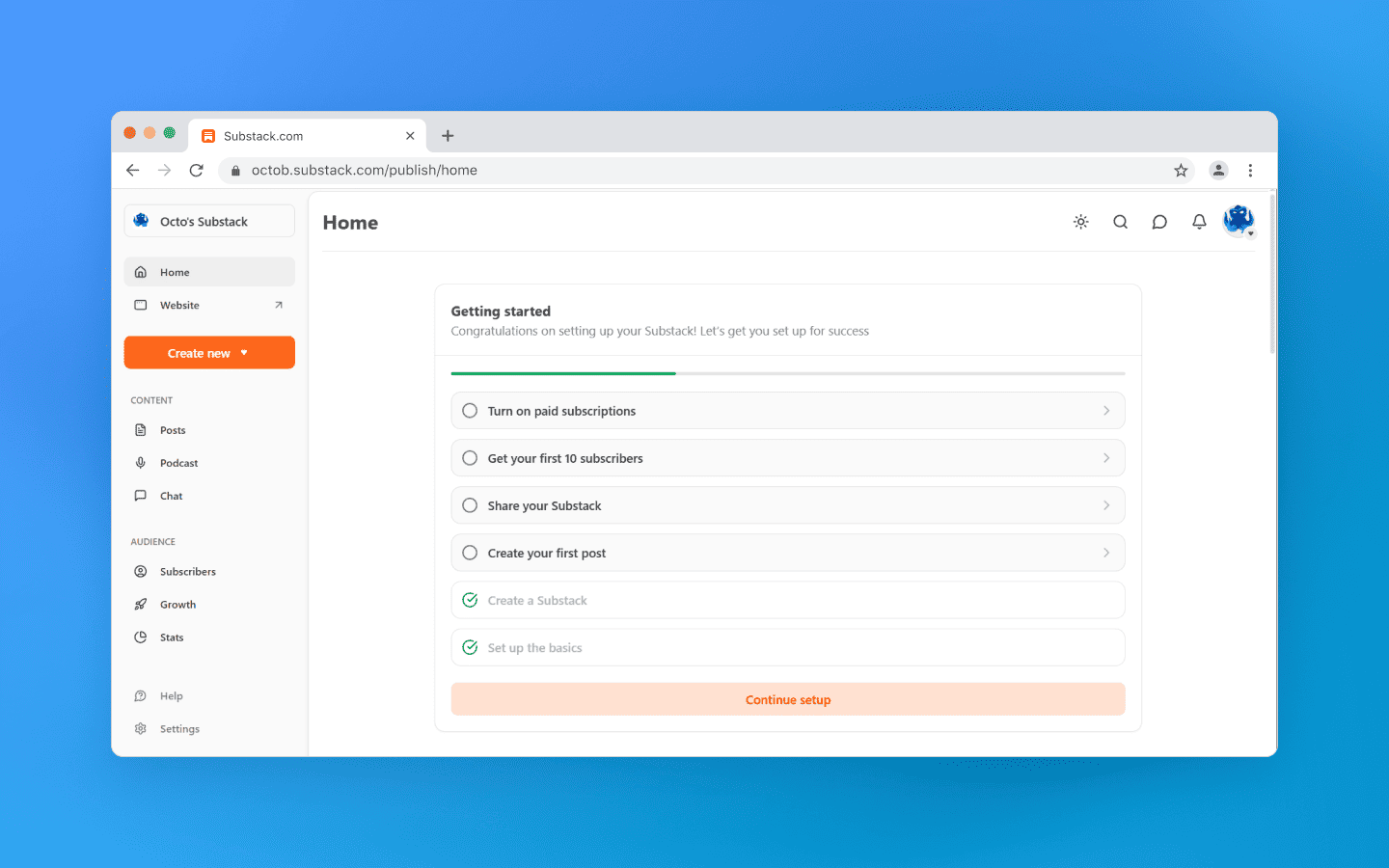
Follow this simple guide to set up your Substack page
Set your pricing
When choosing a subscription price, an author needs to consider audience expectations and the content value. A price that is too high without clear justification reduces conversion rates, while a price that is too low limits earning potential.
On Substack, the most common approaches are:
monthly subscriptions;
annual subscriptions with a discount;
limited-time offers for new subscribers.
Flexible pricing allows you to test different earning models and find the optimal balance between audience growth and income level. Publication frequency, consistent quality, and a clear content structure directly affect audience retention and, consequently, long-term earnings.
Stick to a schedule
To earn on Substack, writing only when inspired is not enough. Successful authors work according to a content plan. A systematic strategy includes:
planning topics and publication formats;
balancing free and paid content;
maintaining regularity and consistency;
analyzing audience engagement.
A content plan helps retain subscribers and reduces the risk of burnout, which directly impacts income stability. The optimal schedule is 1–3 pieces per week.
Many people start Substack as an experiment or hobby, but if your goal is to earn, you need to analyze audience reactions to publications, work with feedback, and optimize your content. Substack encourages this approach, as the subscription model requires consistency and trust.
Content strategy
A well-structured content strategy is a key factor if you want to earn money consistently on Substack. Even high-quality texts will not generate income if they are published chaotically, do not consider audience expectations, and do not guide readers toward a paid subscription. Let us examine what a successful Substack earning strategy consists of.
Know your reader
To earn on Substack, you need to clearly understand who your reader is and why they read your newsletter. A common mistake among beginners is writing “for everyone.” In reality, Substack works best in narrow niches where the audience is willing to pay for expertise, experience, or a unique perspective.
When building your content strategy, it is important to answer several questions:
what problem the reader wants to solve;
what level of knowledge the audience has: beginner, advanced, or expert;
what exactly the readers are willing to pay for.
For example, an investment newsletter for beginners will differ significantly in tone and presentation from a Substack blog for experienced traders. The more precisely you understand your reader, the higher the probability they will purchase a paid subscription and stay long-term. This directly affects your ability to earn consistently.
A useful practice is regularly analyzing comments, email replies, and open-rate stats. Substack provides this data, and ignoring it means losing potential income.
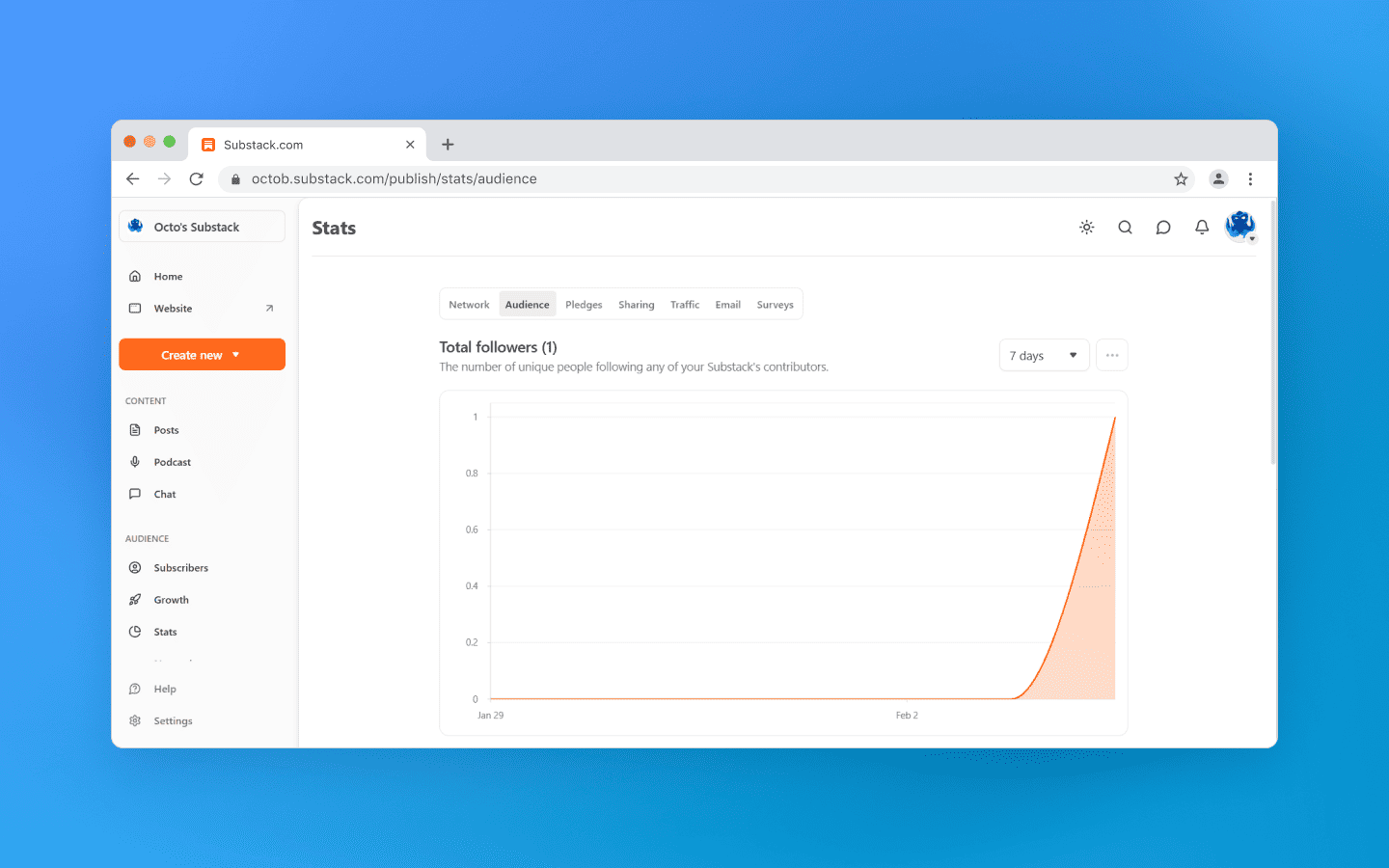
You will find many useful reports about your page in Substack analytics
Work on your headlines
Headlines and snippets are the first attention filter. Even the most useful text will not be read, let alone paid for, if the headline does not spark interest. On Substack, a headline works in several places at once: in the email, in the platform feed, and when shared on social media.
Effective headlines:
clearly reflect the article benefit;
address a specific pain point or goal;
do not look like clickbait but still create curiosity.
Example of a weak headline: “My thoughts on content.”
Example of a strong headline: “How to build a content strategy and start earning on Substack within 3 months.”
The snippet (the first lines of text) reinforces the headline’s effect. Its purpose is to explain why the reader should continue and why the material is valuable. Well-crafted headlines and snippets increase email open rates and conversion to paid subscriptions, and therefore help you earn more.
Use free content
If you want to earn money steadily on Substack, it makes sense to use free content as an audience acquisition tool. Free articles allow you to:
demonstrate your expertise;
build trust;
explain the value of paid content;
gradually lead the reader to the decision to pay.
Ideally, free content should make up 30–50% of your page. This may include introductory articles, reviews and analysis, personal observations, and case studies without full details. Such texts are especially important for new authors who are just starting to earn on Substack. Free publications serve as the top of the funnel and help grow your subscriber base without aggressive sales tactics.
Experiment with various formats
Substack supports a variety of content formats. To earn effectively, it is important to combine:
Educational articles: guides, instructions, case breakdowns.
Analytical reviews: trend research, forecasts, and analysis.
Newsletters: to maintain engagement and regular contact with the audience.
Practical checklists and templates: providing tangible value to paid subscribers.
Video materials or podcasts: if your audience prefers multimedia.
This approach increases the value of the subscription and encourages readers to pay rather than only consume free content.
Promotion strategy
Even the highest-quality content will not start generating income on its own. To truly earn on Substack, an author must build a systematic promotion strategy, constantly work on expanding reach, attracting new audiences, and growing the subscriber base. Audience growth directly affects earning potential, especially from paid subscriptions.
Cross-promotion on other platforms
Cross-promotion is one of the most effective and affordable ways to grow Substack without significant financial investment. The idea is to use other platforms as traffic sources for your newsletter.
The most popular channels for cross-promotion include:
personal blogs and websites;
YouTube and podcasts;
professional communities and forums.
It is important not just to drop links to Substack, but to adapt your presentation for each platform. For example, on social media, short key points, quotes, or key insights from an article work best, as they spark interest and encourage clicks. This approach helps attract a warmer audience already interested in the topic and more likely to subscribe.
Regular cross-promotion not only increases subscriber numbers but also helps your Substack page reach stable income faster. The more entry points for your audience, the higher your earning potential.
Guest posting and collaborations
Guest posts and collaborations are another powerful growth tool. Substack is particularly well-suited for cooperation between authors working in related niches. This format allows you to exchange audiences and strengthen your expert status.
Collaboration formats may include:
guest articles in another author’s newsletter;
joint issues or publication series;
mutual Substack recommendations;
interviews and co-created analytical materials.
The main rule is delivering value to both audiences. If a collaboration feels artificial or intrusive, it will not bring results. But when authors complement each other, subscribers will willingly follow and stay.
Guest posts are especially effective at the beginning, when your own audience is still small. They help you build your initial subscriber base faster and lay the foundation for future earnings on Substack. Over time, such partnerships can become a regular source of growth and additional income.
Conclusion
Substack is a powerful platform for authors who want to earn directly from their content. It combines the convenience of email newsletters, flexible paid subscriptions, and the ability to build long-term relationships with an audience. To earn on Substack, an author needs to:
carefully choose a niche and audience;
build a systematic content strategy;
publish high-quality materials regularly;
properly combine paid and free publications;
use additional income sources such as affiliate links and sponsored integrations.
Even a small but engaged audience allows you to earn money. Over time, with systematic work and continuous optimization, Substack can become a stable and predictable source of income. The platform suits both beginners and experienced authors ready to invest time and expertise into creating valuable content.
FAQ
Can I earn money on Substack?
Yes, you can earn on Substack through paid subscriptions, as well as affiliate programs, sponsorships, and selling your own products or services. The platform allows authors to generate income directly from their audience without relying on advertising algorithms, making earning money more stable with consistent work.
Do I need a large audience to earn on Substack?
No, you do not need a large audience to earn on Substack. Even a few hundred engaged subscribers can generate income if your content addresses specific needs and provides high value to readers.
How often should I publish on Substack?
The optimal publishing frequency on Substack is 1–3 times per week. A regular publishing schedule helps retain your audience, maintains interest in your newsletter, and positively impacts income stability.
Manage multiple accounts, simplify ad integrations, and earn consistent income with your content.
Would you like to try Octo Browser at discount?
Use the promo code OCTOBLOG to get 30% off any subscription. This offer is valid only for new users.
What is Substack and how does it work?
Substack is an online platform that combines a blog, an email newsletter, and a paid subscription system. An author publishes materials on their Substack page, and subscribers receive them by email or read them on the website.
The platform is originally built for monetization. The author does not need to connect third-party payment systems, set up complex integrations, or deal with technical details. Substack handles all of that, allowing you to focus on content and your earning strategy.
On social media, an author depends on algorithms, reach, and advertising formats. On Substack, everything is different: if the content is valuable, the reader pays the author directly. With rare exceptions, Substack does not limit newsletter topics and does not interfere with the author’s editorial policy. This makes the platform attractive for independent experts and niche projects.
Authors who earn the most on Substack usually:
have expertise in a specific niche;
are ready to publish content regularly;
can explain complex topics in simple language;
are focused on long-term work with their audience.
Would you like to learn how to monetize your content using an anti-detect browser? Read our other articles covering OnlyFans, YouTube, and Twitch.
Main ways to earn money on Substack
Paid subscribers
The most popular format on Substack, where you earn directly from your audience. Subscribers get access to exclusive publications and the opportunity to interact directly with the author. The most popular formats include:
in-depth analytical articles;
practical guides and instructions;
case studies and breakdowns;
forecasts and research;
news coverage with expert insights.
The author publishes texts, builds trust, and gradually offers a paid subscription. Substack provides all the necessary tools for this, from setting up content access rights to automatic payment processing. As a result, the earning model becomes transparent and predictable.
Sponsorship and native advertising
For authors working in technology, business, marketing, and education, partnerships are an important additional income source. For instance, your Substack articles can cover personal experiences with services, tools, or platforms and include affiliate links.
When several thousand people subscribe to your Substack newsletter, brands start offering collaborations. These may include native mentions, reviews, or dedicated sponsored issues. This allows you to earn without increasing the subscription price while maintaining audience loyalty. However, it is important to keep things balanced: if your newsletter turns into a collection of advertising links, subscriber trust drops, and overall earnings decline as well.
Affiliate links and the affiliate marketing model
Substack is well-suited for affiliate marketing because the author communicates directly with an engaged audience. Placing affiliate links allows you to earn extra money without changing the main subscription model. This works especially for content covering technology, marketing, finance, and online services.
To earn on Substack using affiliate programs, it is important to follow several principles:
recommend only products you actually use;
explain why your audience needs this or that tool;
avoid overloading publications with links.
In the long term, this approach increases both audience trust and the author’s overall earnings.
Selling your own products and services
Many authors use Substack as a platform to promote their own products. These may include:
online courses;
training programs;
consultations;
access to private clubs or communities.
The newsletter can direct the audience to your website, Telegram channel, or product landing pages, while Substack serves as the main communication channel. The author first builds trust through free and paid content, creates the top of the funnel on Substack, and then offers higher-priced products.
How much money can you earn on Substack?
Earnings on Substack do not depend only on the number of subscribers. Key factors include:
the niche and audience purchasing power;
the author’s level of expertise;
publication frequency;
content format;
monetization strategy.
Let us calculate potential earnings using an example. If a Substack newsletter has 1,000 subscribers and a 2% conversion rate to paid subscriptions, that equals 20 paying users. At a subscription price of $6, the author’s monthly income will be around $120.
If the audience grows to 5,000 subscribers with a 3% conversion rate, the number of paid subscribers increases to 150. At a subscription price of $8, earnings reach $1,200.
Substack charges a 10% fee on paid subscriptions, and Stripe payment processing fees also apply. This should be taken into account in calculations, but even with fees, Substack remains a profitable tool for earning money on content.
Even niche projects can earn on Substack. A highly specialized audience is often willing to pay more money for high-quality and unique content. Therefore, a small newsletter in a narrow professional niche can generate more income than a popular blog.
Keep in mind that the first months are often spent building up an audience and testing various formats. However, Substack is well-suited for long-term work. Over time, your subscriber base grows, you gain audience trust, and you can increase subscription prices. As a result, earnings become more stable and predictable than on platforms that depend on advertising or algorithms.
How to start earning money on Substack from scratch
Choosing a niche and audience for Substack
One of the main reasons beginner authors fail to earn on Substack is choosing a topic that is too broad or vague. The broader the topic, the harder it is to explain the value of the subscription. A niche helps to:
clearly formulate your unique selling proposition;
attract a target audience;
increase conversion to paid subscriptions.
Substack works especially well in niches where expertise is valued. In practice, the highest-earning Substack newsletters are in the following areas:
finance, investments, economics;
technology, startups, IT;
marketing, analytics;
education and professional development;
niche-specific reviews and research.
In these niches, the audience understands the value of information and is willing to pay for high-quality content.
Before launching your own Substack, it is important to understand who your reader is, what problems they have, and what content they are willing to pay for. The more precise the audience profile, the easier it is to build an earning strategy. Substack allows you to work even with a very narrow audience if the content precisely meets its needs.
To avoid wasting precious time, test your niche in advance. This can be done:
through surveys on social media;
with free test publications;
by analyzing similar newsletters on Substack.
If the audience responds and asks questions, this is a good sign that you can earn in this niche.
Substack is best suited for authors ready to work in one niche for a long time. Consistency builds expertise, and expertise forms the foundation of earnings. Frequent topic changes reduce trust and hinder income growth.
Create a Substack account
The first step for those who want to earn money on Substack is registration and basic account setup. The process of creating a Substack newsletter is simple: you only need to provide an email, project name, and description. However, at this stage many authors make mistakes that later prevent them from earning.
It is important to clearly formulate the value you provide to the reader from the start. A visitor to your page should understand:
what the newsletter is about;
what problems it solves;
why it is worth paying for.
A properly designed landing page directly affects future earnings.
Follow this simple guide to set up your Substack page
Set your pricing
When choosing a subscription price, an author needs to consider audience expectations and the content value. A price that is too high without clear justification reduces conversion rates, while a price that is too low limits earning potential.
On Substack, the most common approaches are:
monthly subscriptions;
annual subscriptions with a discount;
limited-time offers for new subscribers.
Flexible pricing allows you to test different earning models and find the optimal balance between audience growth and income level. Publication frequency, consistent quality, and a clear content structure directly affect audience retention and, consequently, long-term earnings.
Stick to a schedule
To earn on Substack, writing only when inspired is not enough. Successful authors work according to a content plan. A systematic strategy includes:
planning topics and publication formats;
balancing free and paid content;
maintaining regularity and consistency;
analyzing audience engagement.
A content plan helps retain subscribers and reduces the risk of burnout, which directly impacts income stability. The optimal schedule is 1–3 pieces per week.
Many people start Substack as an experiment or hobby, but if your goal is to earn, you need to analyze audience reactions to publications, work with feedback, and optimize your content. Substack encourages this approach, as the subscription model requires consistency and trust.
Content strategy
A well-structured content strategy is a key factor if you want to earn money consistently on Substack. Even high-quality texts will not generate income if they are published chaotically, do not consider audience expectations, and do not guide readers toward a paid subscription. Let us examine what a successful Substack earning strategy consists of.
Know your reader
To earn on Substack, you need to clearly understand who your reader is and why they read your newsletter. A common mistake among beginners is writing “for everyone.” In reality, Substack works best in narrow niches where the audience is willing to pay for expertise, experience, or a unique perspective.
When building your content strategy, it is important to answer several questions:
what problem the reader wants to solve;
what level of knowledge the audience has: beginner, advanced, or expert;
what exactly the readers are willing to pay for.
For example, an investment newsletter for beginners will differ significantly in tone and presentation from a Substack blog for experienced traders. The more precisely you understand your reader, the higher the probability they will purchase a paid subscription and stay long-term. This directly affects your ability to earn consistently.
A useful practice is regularly analyzing comments, email replies, and open-rate stats. Substack provides this data, and ignoring it means losing potential income.
You will find many useful reports about your page in Substack analytics
Work on your headlines
Headlines and snippets are the first attention filter. Even the most useful text will not be read, let alone paid for, if the headline does not spark interest. On Substack, a headline works in several places at once: in the email, in the platform feed, and when shared on social media.
Effective headlines:
clearly reflect the article benefit;
address a specific pain point or goal;
do not look like clickbait but still create curiosity.
Example of a weak headline: “My thoughts on content.”
Example of a strong headline: “How to build a content strategy and start earning on Substack within 3 months.”
The snippet (the first lines of text) reinforces the headline’s effect. Its purpose is to explain why the reader should continue and why the material is valuable. Well-crafted headlines and snippets increase email open rates and conversion to paid subscriptions, and therefore help you earn more.
Use free content
If you want to earn money steadily on Substack, it makes sense to use free content as an audience acquisition tool. Free articles allow you to:
demonstrate your expertise;
build trust;
explain the value of paid content;
gradually lead the reader to the decision to pay.
Ideally, free content should make up 30–50% of your page. This may include introductory articles, reviews and analysis, personal observations, and case studies without full details. Such texts are especially important for new authors who are just starting to earn on Substack. Free publications serve as the top of the funnel and help grow your subscriber base without aggressive sales tactics.
Experiment with various formats
Substack supports a variety of content formats. To earn effectively, it is important to combine:
Educational articles: guides, instructions, case breakdowns.
Analytical reviews: trend research, forecasts, and analysis.
Newsletters: to maintain engagement and regular contact with the audience.
Practical checklists and templates: providing tangible value to paid subscribers.
Video materials or podcasts: if your audience prefers multimedia.
This approach increases the value of the subscription and encourages readers to pay rather than only consume free content.
Promotion strategy
Even the highest-quality content will not start generating income on its own. To truly earn on Substack, an author must build a systematic promotion strategy, constantly work on expanding reach, attracting new audiences, and growing the subscriber base. Audience growth directly affects earning potential, especially from paid subscriptions.
Cross-promotion on other platforms
Cross-promotion is one of the most effective and affordable ways to grow Substack without significant financial investment. The idea is to use other platforms as traffic sources for your newsletter.
The most popular channels for cross-promotion include:
personal blogs and websites;
YouTube and podcasts;
professional communities and forums.
It is important not just to drop links to Substack, but to adapt your presentation for each platform. For example, on social media, short key points, quotes, or key insights from an article work best, as they spark interest and encourage clicks. This approach helps attract a warmer audience already interested in the topic and more likely to subscribe.
Regular cross-promotion not only increases subscriber numbers but also helps your Substack page reach stable income faster. The more entry points for your audience, the higher your earning potential.
Guest posting and collaborations
Guest posts and collaborations are another powerful growth tool. Substack is particularly well-suited for cooperation between authors working in related niches. This format allows you to exchange audiences and strengthen your expert status.
Collaboration formats may include:
guest articles in another author’s newsletter;
joint issues or publication series;
mutual Substack recommendations;
interviews and co-created analytical materials.
The main rule is delivering value to both audiences. If a collaboration feels artificial or intrusive, it will not bring results. But when authors complement each other, subscribers will willingly follow and stay.
Guest posts are especially effective at the beginning, when your own audience is still small. They help you build your initial subscriber base faster and lay the foundation for future earnings on Substack. Over time, such partnerships can become a regular source of growth and additional income.
Conclusion
Substack is a powerful platform for authors who want to earn directly from their content. It combines the convenience of email newsletters, flexible paid subscriptions, and the ability to build long-term relationships with an audience. To earn on Substack, an author needs to:
carefully choose a niche and audience;
build a systematic content strategy;
publish high-quality materials regularly;
properly combine paid and free publications;
use additional income sources such as affiliate links and sponsored integrations.
Even a small but engaged audience allows you to earn money. Over time, with systematic work and continuous optimization, Substack can become a stable and predictable source of income. The platform suits both beginners and experienced authors ready to invest time and expertise into creating valuable content.
FAQ
Can I earn money on Substack?
Yes, you can earn on Substack through paid subscriptions, as well as affiliate programs, sponsorships, and selling your own products or services. The platform allows authors to generate income directly from their audience without relying on advertising algorithms, making earning money more stable with consistent work.
Do I need a large audience to earn on Substack?
No, you do not need a large audience to earn on Substack. Even a few hundred engaged subscribers can generate income if your content addresses specific needs and provides high value to readers.
How often should I publish on Substack?
The optimal publishing frequency on Substack is 1–3 times per week. A regular publishing schedule helps retain your audience, maintains interest in your newsletter, and positively impacts income stability.
Stay up to date with the latest Octo Browser news
By clicking the button you agree to our Privacy Policy.
Stay up to date with the latest Octo Browser news
By clicking the button you agree to our Privacy Policy.
Stay up to date with the latest Octo Browser news
By clicking the button you agree to our Privacy Policy.

Join Octo Browser now
Or contact Customer Service at any time with any questions you might have.
Join Octo Browser now
Or contact Customer Service at any time with any questions you might have.
Join Octo Browser now
Or contact Customer Service at any time with any questions you might have.